Blog Feed

Antibiotic Resistance

Antibiotics are prescribed to people every single day all across the world for various reasons. They are very helpful in combatting illnesses, whether the illness is mild or life-threatening. However, in recent years, the excessive and often unnecessary use of antibiotic drugs have had a negative effect. It has posed a new problem in the health world-the development of superbugs. For those who are not familiar with the term, superbugs can be defined as a strain of bacteria that has become resistant to the drugs that treat it. You can see why this may pose a problem. If a certain bacteria is causing someone to have a disease or illness, typically it is able to be treated with antibiotics. However, if said bacteria develops a resistant to the antibiotic drug, then the illness will still persist. So how did these superbugs develop? Let’s discuss.

One of the biggest reasons for the development of superbugs is the overuse of antibiotic drugs. This can be as a result of a wrongful prescription or sometimes people may try to treat a virus they have with old antibiotics that they possess. Whenever someone takes antibiotics that are not needed, it can lead to the helpful bacteria in our microbiome to be killed and leave way for more harmful bacteria to multiply and gain resistance to certain drugs. Another cause of superbugs in modern times is the consumption of animals. In this article, it is discussed how farmers often use antibiotics on their animals to help promote their growth and prevent infection. When we consume these animals we are also consuming the antibiotics that they had consumed. Further killing off the normal/healthy bacteria present in our microbiome.

According to CNN, someone in the United States every 15 minutes from a superbug. That adds up to about 35,000 deaths per year from bacteria that have developed resistance to the drugs that are supposed to help. This is a global problem and a very critical health issue. The Centers for Disease Control and Prevention have identified multiple superbugs on their urgent list. One of the deadliest on their list is Clostridium difficile- a bacteria we have talked about often in our Microbiology class. This antibiotic-resistant bacteria causes over 10,000 deaths per year in the United States. These numbers are huge. I believe there needs to be more awareness put out regarding the affects of antibiotic resistance. People need to know that they can not take antibiotics for any time they get sick-especially with a viral disease because antibiotics will have zero effect on that. Doctors must also make a better job of prescribing the correct drugs for the correct illness.

This is a quickly growing health problem, and it will take tremendous effort from both the general public and health officials to slow down the production of more superbugs.

Talking Bout Tetanus

Years ago, before I was in college and still full of life, my friends and I decided to go on an adventure. Our adventure really wasn’t as extravagant as the word may lead you to think, in all actuality, we were just exploring an old, abandoned middle school in the middle of no where at midnight. Sounds smart right? So while on this extravagant adventure, we had to climb over a very old and rusty fence. Once we made it into the school we were pretty let down to find out that it in fact was not haunted and just contained a bunch of vulgar graffiti written on the walls. That was until we were met with a scare! Not from a ghost, but from a bat that was chilling in the corner of the building. My friends and I took off, with me leading the pack. I was so scared that the bat was going to chase me that I wasn’t even paying attention to where I was running and WHAM I ran right into the old, rusty fence and had a huge scratch on my leg.

Now, when this happened, and my friends saw the scratch on my leg, they immediately started to ask me if I had my Tetanus shot. I had no idea and I began to freak out thinking that I was about to become infected with a disease that I knew nothing about. One big common misconception about acquiring Tetanus is that it is caused by the rust of whatever broke your skin. This is not true. It is caused by Clostridium Tetani, a endospore toxin that is produced by bacteria. According to the Mayo Clinic, this toxin is often found in the soil and dust. This is why Tetanus is often associated with rust. It’s endospores are located in the soil, and in outdoor conditions, soil is everywhere. In order for the toxin to infect someone, it must enter through a flesh wound. Just because it’s endospores are everywhere, does not necessarily mean you will get infected. Just try to avoid any type of wound altogether.

Most people who get infected with Tetanus are those who are not vaccinated. The vaccination process for this specific disease has a lot of components to it which is discussed in this article released by the CDC. The vaccination for Tetanus is often given in tandem with vaccination against diphtheria and pertussis and is known as DTap. Vaccines for these diseases are recommended for everybody. When you are a baby, it is recommended that you get 3 shots of the DTap vaccine in order to build up high levels of protection within your immune system. You get these shots at 2 months, 4 months and 6 months. Following these initial 3 shots, young children get two booster shots of Tdap to ensure that same protection is maintained throughout childhood. It’s recommended that preteens get one booster shot of Tdap around the ages of 11 and 12. After that, adults should get a shot every 10 years. It’s a lot of shots that you have to keep up with, but as always, vaccinations are very important, and they could save your life one day!

Image result for tetanus meme

Eradicating Polio

Vaccines have been a hot topic on my blog. I mean hey, they play a very critical role in our everyday lives. They protect us from dangerous pathogens, they allow for the spread of disease to be greatly reduced, and in the case when people are against routine/proper vaccination, it can have grave effects for society-especially those who are immunocompromised. Vaccines are especially important when it comes to dealing with the viral disease poliomyelitis, also known as polio. For those who are not familiar with the disease, The World Health Organization describes polio as a highly contagious disease that mainly infects children and can be transferred via person-to-person transmission or through other vehicles such as food and water. Symptoms include fever, fatigue, limb pain, and in some cases paralysis. Unfortunately, this disease is incurable, so the only way it can be prevented and dealt with is through vaccination.

The two main vaccinations used for the Polio disease are the Intravenous Polio Vaccine (IPV) and the Oral Polio Vaccine (OPV). The OPV is much more commonly used in low-economic countries because it is cheaper and easier to administer. Current news with the Polio vaccine is that it is close to being eradicated. This article shares that in October of 2019, Type 3 of the polio virus had officially been eradicated. In 2015, Type 2 had been eradicated. That leaves only one more type, Type 1, to be eradicated. The way that these diseases are able to be eradicated is that the virus cannot live long outside of a human carrier. If everyone is vaccinated against the virus, then it is not able to infect anyone and therefore it does not have a reservoir that it will be able to live in. This leads to the death of the virus, and so far all of the Type 2 and Type 3 Polio viruses have died. The two countries where Type 1 is still present are Afghanistan and Pakistan. Public health initiatives such as the Global Polio Eradication Initiative have been working tirelessly to get these countries the resources that they need.

I believe that the work being done to eradicate Polio is very important. When you look at the infection numbers in the past and compare it to the present-they have dramatically decreased. In an article released by The World Health Organization, it is stated that since the start of the Global Polio Eradication Initiative, case numbers have been decreased by more than 99%. Although this disease is endemic in only a small number of countries, I believe this is a global health issue that all countries should help contribute to fight. At the end of the day, if the disease is not completely eradicated, everyone in the world can still potentially acquire it. If more governments came together to provide resources and tackle health issues globally, not only could we eradicate Polio, but I also believe that we could greatly decrease the spread of many other diseases. It’s been done before with smallpox, so there isn’t any reason why it cannot be done again!

Image result for global health memes

The History of Anti-Vaxxing

Anti-vaxxing is something that is brought up often in the medical world. This phenomenon can be defined as one’s refusal to get vaccines or get their children vaccinated for different reasons. Most commonly, anti-vaxxers reasoning as to why they are against vaccinations is out of fear that the vaccination will cause the disease being vaccinated against or another unwanted disease. Not getting vaccinations can be very dangerous. Not only is it dangerous for the person who is not getting them, but it also puts others in society at risk. Namely, those who are medically/physically unable to get vaccines, are put at risk by those who are not vaccinated. Typically they rely on something called “herd immunity” to keep them free of disease. However, herd immunity is hard to achieve with the phenomenon of anti-vaxxing because it typically requires that at least 90% of the population is vaccinated. The World Health Organization actually listed anti-vaxxing as one of the top ten global threats of 2019.

So where did this trend come from? The Measles and Rubella Initiative published a timeline following the sequence and history of anti-vaxxers. It all began in France in 1763. An Italian doctor named Gatti introduced the idea of inoculation, which is another word for vaccination. Unfortunately, the doctor did not properly quarantine his patients and it put the health of the other Paris citizens at risk. The French government banned all inoculations that took place in Paris. Eventually, history moved on and the progress with vaccinations moved on as well. In 1796 a vaccination for the smallpox was invented. In 1853 the Vaccination Act of 1853 was passed which made vaccination for infants up to 3 months old required. Of course now, vaccinations are optional.

Fast forward to the year of 2000 in the United States. There were no cases of the measles transmitted by patients within the United States. If there was a case of the measles found, it was imported from an infected patient from outside of the United States. According to this article published by The Atlantic, there were 1,000 cases of Measles recorded in the first five months of 2019. Measles was considered eliminated in the US two decades ago, and now it is back. Is this due to the lack of vaccinations? Records show that since 2000, the number of American children under two years that have gone unvaccinated have quadrupled. Regardless if whether or not this is the cause for the resurgence of Measles, these numbers show the influence the anti-vaxx movement has had during the modern times.

Thoughts and feelings about vaccinations have changed over the years, and it would not surprise me if it changed again sometime in the future.

Your Marvelous Microbiome

Ah, the microbiome. Sounds like such a complicated word doesn’t it? Well, if your wondering what the microbiome is, look no further. The microbiome is you! It is the congregation of all microbiota such as bacteria, fungi, protozoa, viruses, etc. that make up the human body. I know I know, it can sound kind of scary and gross hearing about the millions of bacteria that live inside of us. However, that is the beauty of the microbiome! Not all bacteria are bad. They aid in digestion, harvesting energy, fighting off pathogens, and so much more. In this post, we are going to talk about some of the new interesting findings regarding our microbiome and learn a little more about what it means to us.

Besides all of the important jobs that the microbiome does regarding our body and our health, it also can provide some answers and information to scientists. According to a new study put out regarding our microbiome, Katerina Johnson claims that there may actually be a link between our gut bacteria and our personalities. 655 adults were given at-home “gut kits” and were asked to fill out questionnaires with questions regarding their personalities. The results revealed that the people who tended to be more social had a more diverse microbiome. The people who’s microbiome was not as diverse showed signs of having increased levels of anxiety and stress. So what does this information do for us? Why do we care what the microbiome does for our personalities? Well, with revelations like these, it opens the door for more research to be conducted. This information could be used to develop beneficial therapies for people with mental health problems.

Another interesting finding regarding the microbiome is that the microbiota found on our skin, mouth, and gut can help predict your age. This article lays out the details of the research project. Using different machinery, the researchers were able to take microbiota from different locations on the body and predict a person’s age to within under 4 years. The saliva provided some of the most accurate readings, and bacteria from one’s feces provided the least accurate. Now I know you probably read that and thought to yourself, so what? Why is this important? Well, as mentioned previously, our microbiota have a huge affect on our health. Because of this, knowing the age of your microbiota could perhaps be a tell tale sign of how healthy an individual is. If someone is 70 years old, but their microbiota suggests that they are 50 years old, then that could be an indicator that they are very healthy. With much more research, this information could be useful for a number of things in the future.

See? Not all bacteria is bad. Our microbiome-although small is an integral part of our human body and does so much for us.

Image result for microbiome memes

Coronavirus Continued

In my last blog post about the Coronavirus, we discussed the current outbreak of the disease, the signs and symptoms, and what to do if you think you are infected or know of somebody who may be infected. Since that last discussion, the numbers of both infections and deaths have dramatically increased. According to an article by Bloomberg, the global death toll is well over 700 and almost 35,000 people have been infected. The death toll number has officially surpassed the numbers caused by the Severe Acute Respiratory Syndrome (SARS) that occurred from 2002-2003 and also started in China. Why is the coronavirus being spread so rapidly? And what is being done to prevent further damage and a potential pandemic?

One of the reasons as to why Coronavirus is so dangerous is because it takes a long time for the symptoms to appear, so people may be spreading the disease without even knowing it. The incubation period for this disease is estimated to be anywhere from two days to two weeks. For those who are not familiar with these terms, the incubation period is the period from which the microbe/infectious agent is introduced to the host and the onset of signs and symptoms. This means that someone could be walking around for almost two weeks spreading the virus to multiple people they come into contact with without even knowing it. This is why limitations have been placed on travel and health officials have been urging anyone who has been in the China region-specifically Wuhan to go see a health care provider.

There have been drastic efforts made in order to get a control on the spread of coronavirus. Throughout Wuhan, there have been makeshift hospitals/treatment centers set up all across the city to treat people. Updates from CNN, note that hundreds of citizens have been transported via plan to military bases across the United States in order to begin a two week quarantine. However, the U.S. plans to soon halt flights coming out of Wuhan to the United States. Another worrisome development of this virus is that it is not just affecting those on land. Two cruise ships that docked in Hong Kong and Japan have had all of it’s passengers quarantined. Over 60 people from one of the cruise ships have tested positive for the virus since then.

Although many measures have been taken, it seems that the virus just keeps on growing. Let’s hope that health officials can soon find a feasible solution to this outbreak.

Following the Flu: 2020

In last week’s blog, I discussed the coronavirus. This virus has dominated headlines recently as the death toll has raised to an alarming over 700 infections. Although this outbreak is one of the most biggest that has been seen in the world in recent years, it has caused all eyes to be taken off another illness that is affecting millions- influenza. Influenza, also known as the flu, is a disease that has been prominent in the public for years. Every year, we are slammed with commercials about getting flu shots or we are nagged at by our parents to go in and get the shots done. No matter how often it is instilled into our brains to get a flu shot, every year numerous people in America are infected with the illness, and this year is no different. Let’s take a look.

According to an article by CNN, the flu infection rate has dramatically increased during the beginning week of February after it had been on a steady decrease at the beginning of the 2020 year. Both strains A and B have been about the same in activity for during this flu season, but there has been a slight increase in strain A in recent weeks. In the article it is stated, “the CDC estimates that this flu season, which started on September 29, there have been at least 22 million cases of the illness in the US, 210,000 hospitalizations and 12,000 deaths.” These numbers are very large, and as a college student it makes it even more alarming. College culture makes the spread of disease far more likely as students are housed in close quarters with each other and you are constantly in contact with multiple students.

As with most viral diseases, there are a multitude of preventative measures that can be taken. It is important that people regularly wash their hands, avoid coming into contact with those who are sick, and if you are infected immediately visit your health care provider. One of the best forms of protection against the flu is getting vaccinated, i.e. getting a flu shot. Around every year, the flu virus produces a new strain. This is the reason why it is recommended that we get flu shots every year, so that the vaccination can be geared toward the new strain for that year. Troy Brown, a Nurse Practitioner, discusses in his article how this season’s vaccination is only a 58% match for the B strain of the flu. This could be one of the factors contributing to the high numbers for the flu this year. Despite this, it is still important that we take the proper hygiene and preventative measures to stop flu activity from spreading even more.

Image result for flu memes

Understanding the Coronavirus

If you have watched the news lately, read a newspaper, or even just own a phone, you have probably heard about the coronavirus. What started out as an outbreak of a virus that was affecting a small number of citizens in a China town named Wuhan has now grown to affect numerous people in both cities outside of Wuhan and countries outside of China. Some of the countries that have people infected include: the United States, France, Germany, South Korea, Japan, Canada, and many more. As the number of confirmed cases continue to rise and infections are spread all across the globe, the coronavirus outbreak is causing more and more of an uproar. So with all this talk about this disease, the people want to know: what is it? and how can you avoid being infected? Let’s discuss.

According to the Centers for Disease Control and Prevention, the coronavirus is a respiratory illness that can be spread from either animal-to-person (zoonotic) or person-to-person. Similar coronaviruses are common in different species of animals like cats, bats, and cattle, and it is likely that one of these animals were the source of this outbreak. The effect that this disease has on an infected person can range from being asymptomatic (no symptoms) to dying. Common signs and symptoms include fever, cough, and shortness of breath and can occur from two days to two weeks after exposure. There is currently no vaccine to prevent infection, so the best way to prevent it is to prevent exposure. If you have been to China recently and display any of these signs and symptoms, you should avoid contact with anybody else and immediately see out medical care. When you go to receive medical care, it is important to call ahead and tell them of your situation, so that the risk of exposure to others is limited.

Although there have been multiple cases of the coronaviruses reported in the United States, even college students, public health officials say that most U.S. citizens are not at risk of contracting the disease. This may make people feel better, but it is always best to still be informed on how preventative measures you can take. This is a respiratory illness, so it is typically spread via respiratory droplets that are expelled whenever someone sneezes or coughs. Because of this, the World Health Organization advises the public to frequently wash their hands with warm water and soap and to avoid touching your face when you hands are unwashed. They also advise to avoid making unprotected contact with and animals and surfaces in live markets in areas that have cases of the coronavirus. These recommendations not only protect yourself, but can protect others around you as well. It is important that we all know this so we can prevent the outbreak from increasing.

I hope you were able to learn something new after reading this blog. Just remember to wash your hands and be courteous to others when you are sick! Bye for now!

-Diana Debnam

Andrew Wakefield and His Paper Heard Around the World

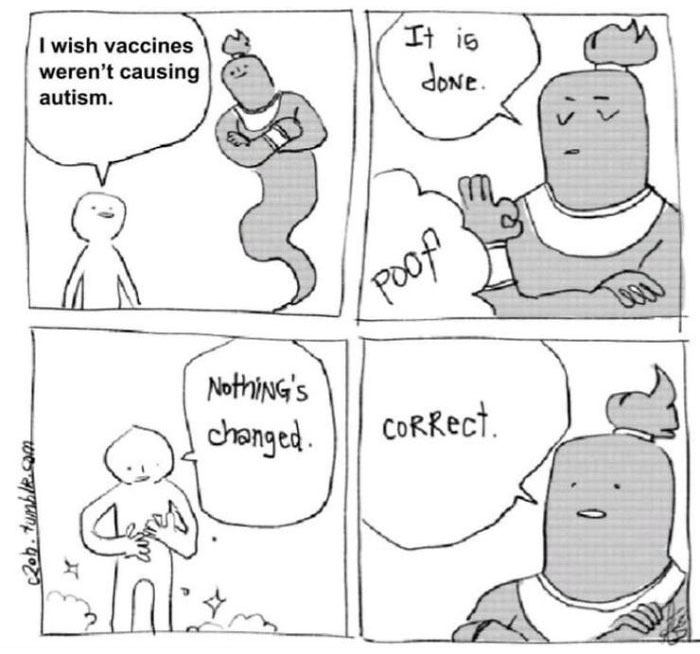
Growing up you may have often heard the phrase “correlation does not imply causation”. Simply put, this means that one can not conclude that two variables have a cause and effect relationship just because they have an observed “correlation” or “association” between each other. For example, just because it rains outside every time I cook eggs in the morning, does not mean that my breakfast is impacting the weather’s tendencies. That is just silly! This concept of correlation not equating causation can be applied to many different situations such as statistics, research, or just everyday occurrences in life. There is no better example of this phrase being enacted out than in the case of Andrew Wakefield and the case study that he released claiming that there was a link between the MMR vaccine and developing autism. Let’s take a further look into the case of Wakefield in order to investigate and find out where it all went wrong and how one paper affected thousands of lives.

Andrew Wakefield’s claims were notoriously investigated and questioned by journalist Brian Deer who published an article exposing Wakefield’s false claims. In this article, Deer laid out the circumstances around Wakefield’s study. The case series had 12 patients who were children. These children were all thought to have autism or some type of psychological disorder and majority of the children had reported having gastrointestinal issues. One of the parents had claimed that their child’s symptoms began after receiving the MMR vaccination which sparked Wakefield’s interest in this subject. Wakefield came into contact with the patients in his study because they had been sent to him by an anti-vaccine campaign. It was later discovered that the study was funded for future litigation against vaccinations. Other scientists have not been able to back the claims of the research that Wakefield conducted linking the MMR vaccine and autism which lead to Wakefield’s case study in The Lancet being redacted.

According to an article released in the Indian Journal of Psychiatry, the implications of Wakefield’s fraudulent claims were huge. Following the publication of the paper, MMR vaccination rates began to dramatically decrease due to parent’s fears that the vaccination may result in their child developing autism. In turn, this phenomenon caused children to be at a much greater risk of the Measles, Mumps, and Varicella infection. Between 2008-2009, there were outbreaks of the Measles in the UK and in some locations throughout the United States and Canada. These outbreaks were linked to the patients being unvaccinated. Arguably, this Wakefield scandal had major influence on the now famous (and also controversial) modern anti-vaxxer movement. This movement is typically led by parents who are passionately and unwaveringly dedicated to the cause of not vaccinating their children. This a very dangerous movement as it exposes a large number of the world’s population to harmful and even deadly diseases.

The story of Andrew Wakefield goes to show how false information in the medical world can lead to a world full of trouble. Just imagine the impact he would have had if these claims were made during the social media era! In conclusion, just remember that correlation does not always mean causation and you should seriously fact check EVERYTHING before making a very serious claim. Thanks for Reading!

-Diana Debnam

Anti-Waxxx-Memes-Draft

Welcome to Diana’s Micro Blog!

Hello Everyone! My name is Diana Debnam, some people call me Double D or DD. I am a junior Exercise and Sport Science major here at UNC. I come from Fayetteville, NC, home of Ft. Bragg, Forest Hills Drive (heyyy J. Cole), and other fun things. In my free time I love to do literally anything with my friends, I like playing sports (basketball, soccer, flag football & racquetball) and I like going to sports games around campus to support the Tar Heels. I also enjoy watching TV shows such as Grey’s Anatomy, Game of Thrones, Queen of the South, etc. My FAVORITE artist ever and the GOAT is the queen: Beyoncé. I’ve seen her in concert twice and I hope some new music drops soon, but until then, enjoy one of my favorite songs from her: Deja Vu. I mean just listen to that bridge!

Until next time!